Jiu-Jitsu is not yet part of the Olympic program, but few competitions bring the sport as close to that environment as the World Games. Organized by the International World Games Association (IWGA), the multi-sport event takes place every four years, following a logic similar to that of the planet’s biggest sporting competition. In 2025, the Chinese city of Chengdu hosted around four thousand athletes from 34 sports, including Jiu-Jitsu, contested under the rules of the Ju-Jitsu International Federation (JJIF).
It is precisely this mix of scarce spots, a long cycle between editions and the chance to represent a nation, not a team, that makes the World Games a unique tournament in a Jiu-Jitsu athlete’s career. One year after reaching the top of the podium in the women’s open class, Tamara Toros is still reaping the rewards of a win that marked not only her career, but also the history of the sport in Hungary.
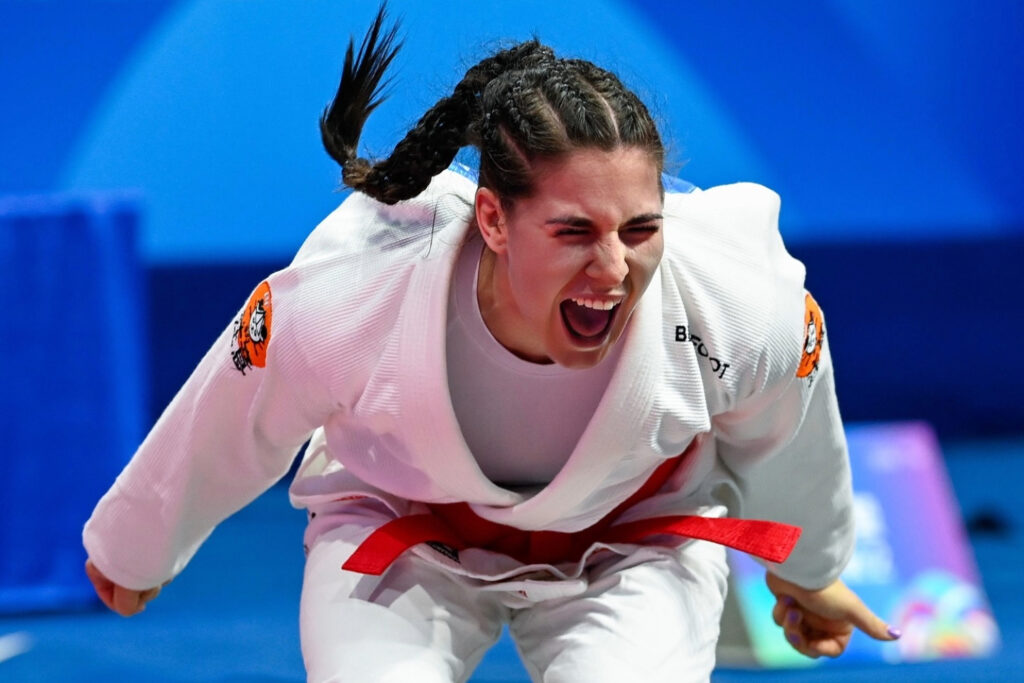
Born in Budapest, Tamara left the country at 15 and moved to Barcelona chasing the dream of building a Jiu-Jitsu career. Now an Atos athlete, she won, at the Chengdu edition, the first gold medal in the history of Hungarian women’s Jiu-Jitsu at the World Games, a result that meant even more because it came while wearing the colors of the country where she was born.
“Representing Hungary at the World Games was extremely emotional for me. I left Budapest at 15 to chase my dream, but I always worked very hard to earn my place on the Hungarian national team. Wearing Hungary’s colors and winning a gold medal for my country made all those tougher years worth it,” she recalled.
ACCORDING TO TAMARA, EXCLUSIVITY MAKES WORLD GAMES GOLD A DIFFERENT KIND OF WIN
Unlike the IBJJF calendar, which gives athletes the chance to compete every year at events such as the Europeans, Pans, Brazilian Nationals and Worlds, the World Games come around only once every four years. Besides the long wait between editions, qualification is extremely limited: each country can have only a few representatives, while the brackets bring together a small number of competitors considered the elite of the sport.
In Tamara’s view, this makes the medal she won in China symbolically different from any other title. For her, simply reaching the World Games is already a victory, while getting to the top of the podium turns the experience into something unforgettable.
“What makes the World Games so unique is the exclusivity of the competition. The event happens only once every four years, just like the Olympic Games. On top of that, only two athletes per country can qualify, and each division brings together just six competitors from around the world. Just earning a spot is already a big achievement,” she explained.
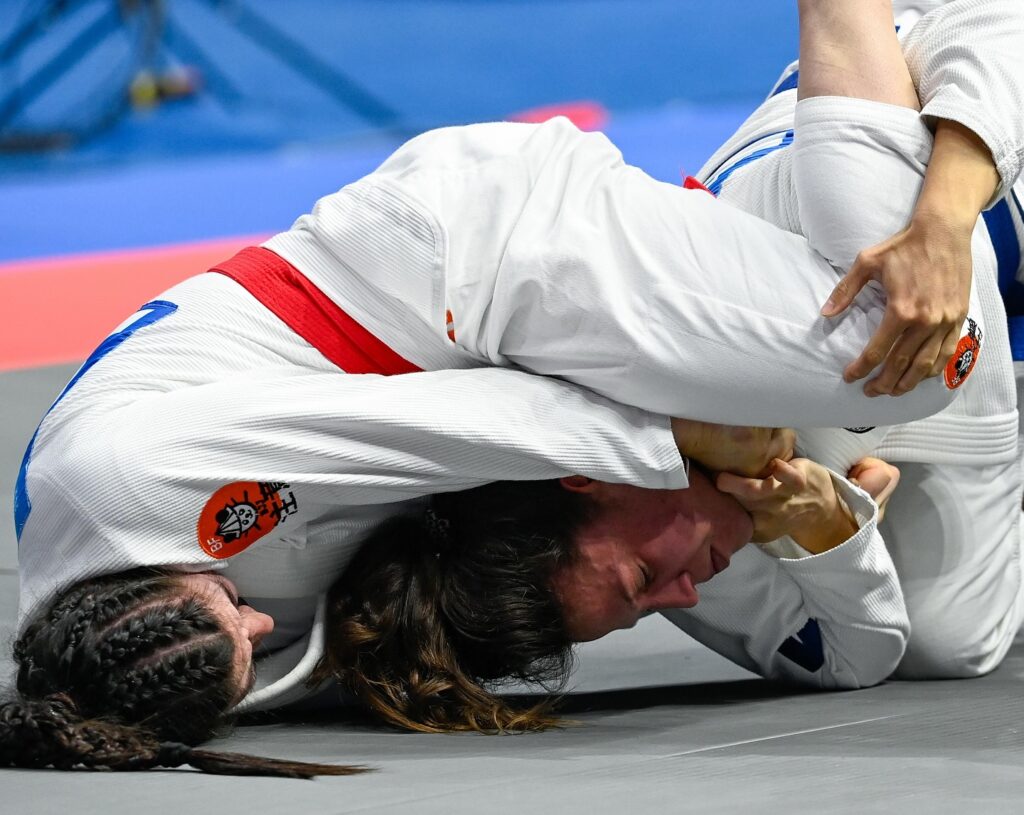
Her winning campaign, however, was far from free of obstacles. Before taking open class gold, Tamara did not get the result she wanted in her weight class. Instead of letting the frustration affect the rest of the competition, the black belt turned the setback into motivation to return to the mat even better prepared.
According to her, the support of coach Gustavo Galvão and strength and conditioning coach Victor Sanchez was key to regaining her confidence before the open class. Remembering how unique that opportunity was helped completely change her mindset.
“It was almost like a transformation. After my weight class, the conversations with Gustavo Galvão and Victor Sanchez made all the difference. They reminded me that the World Games only happen once every four years and that I needed to make the most of that opportunity. Two days later, I went back to the mat feeling like a completely different athlete, and that change in mindset made all the difference,” she said.
This article was originally published in Portuguese: read the original version.