
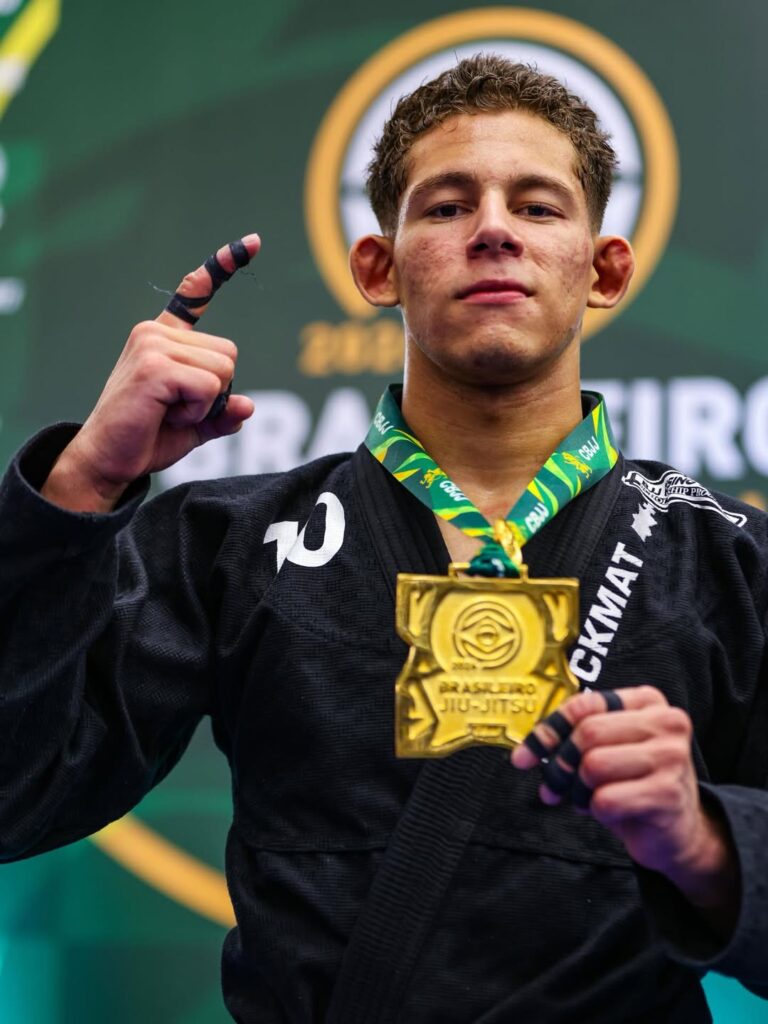
Colored-belt matches generate huge anticipation at events like the Brazilian Nationals of Jiu-Jitsu. With packed brackets and a high level of competition, these divisions always produce battles that become talking points and linger in the community for a long time.
Kellyson Carlos is one of the athletes behind that. A Checkmat purple belt, and one of the team’s biggest talents since Jansen Gomes, he has shown impressive consistency at the major events. The IBJJF Grand Slam circuit is made up of four main events: the Europeans, Pans, Brazilian Nationals and Worlds. Kellyson has already reached the top at the first three. He is 75% of the way down the golden path, and Worlds gold in his hands looks like a logic that is impossible to refute.
At this season’s Brazilian Nationals, in Barueri, the Checkmat champion from Rio Grande do Norte was lethal: four submissions in six matches. He is now a two-time Brazilian National champion. At the Europeans, he had the same number of matches, half a dozen bouts without giving opponents an opening to score a single point. At Pans, he won with fewer matches: four wins to earn gold on the podium.
Below is an exclusive interview with Kellyson Carlos:
THE MAT NATION – You are coming off an impressive string of titles at the Europeans, Pans and now Brazilian Nationals, with a dominant run. What sets you apart from your biggest rivals to reach this level of consistency?
KELLYSON CARLOS – I think the main difference is consistency and the way I approach the process. I always try to plan things so I don’t depend on motivation, only on discipline. I also push myself hard to grow in every area, not just technique. I try to improve mentally, physically and spiritually too. I study my game and monitor it so everything stays on an almost perfect line, you know? Like, I never let my mind rest and get comfortable after a win. I believe that is what keeps me consistent: always being unsatisfied in a good way, always looking to take one more step.
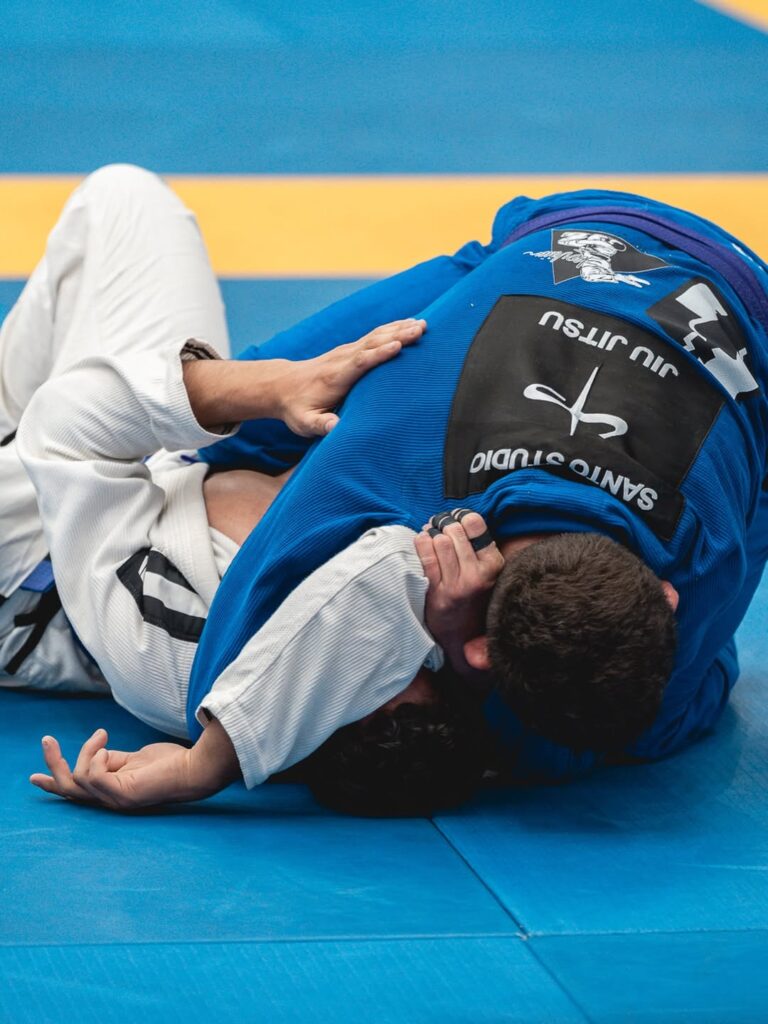
THE MAT NATION – Adult purple belt, especially lightweight, is one of the most competitive divisions in Jiu-Jitsu today. How do you handle the pressure of staying on top against opponents who are more and more prepared and studied?
KELLYSON CARLOS – Look, to be honest, I handle pressure really well, you know? For me, being on top means I’m doing the right work. These days everybody studies each other. So I’m always evolving too. Together with my coaches, Léo Vieira and Sebastian Lalli, I make adjustments so I don’t become a predictable guy. In the end, I don’t go out to compete thinking about who is on the other side, but about executing my game well. I believe that when I do that, the result follows.
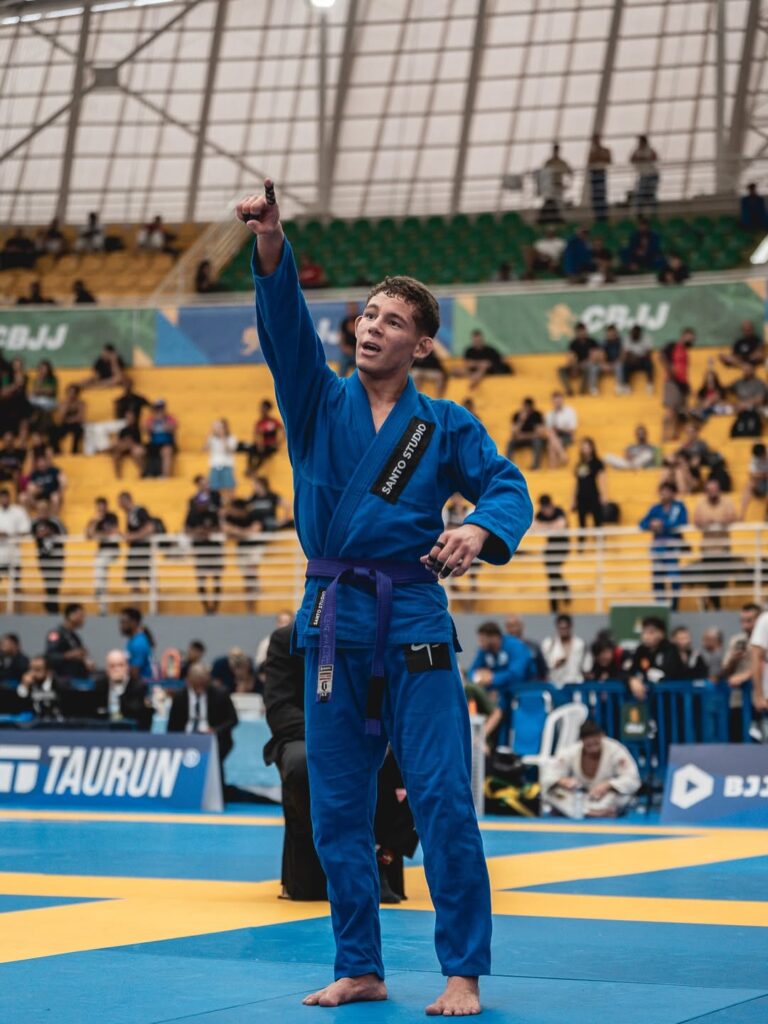
THE MAT NATION – You already had the chance to compete in an IBJJF superfight at the last No Gi Absolute GP, facing Evan Duncan in a gi match, something not every athlete at your belt level gets to experience. How did that experience help you mature as a competitor?
KELLYSON CARLOS – That superfight was an experience that took me out of my comfort zone and raised my standards. Since it was a more high-profile, more studied match, I had to prepare more strategically, take more care with the details and strengthen the mental side even more. It helped me learn to handle the moment, my own expectations and even the crowd’s, and the responsibility. It was definitely an opportunity that did a lot for my maturity as a competitor.
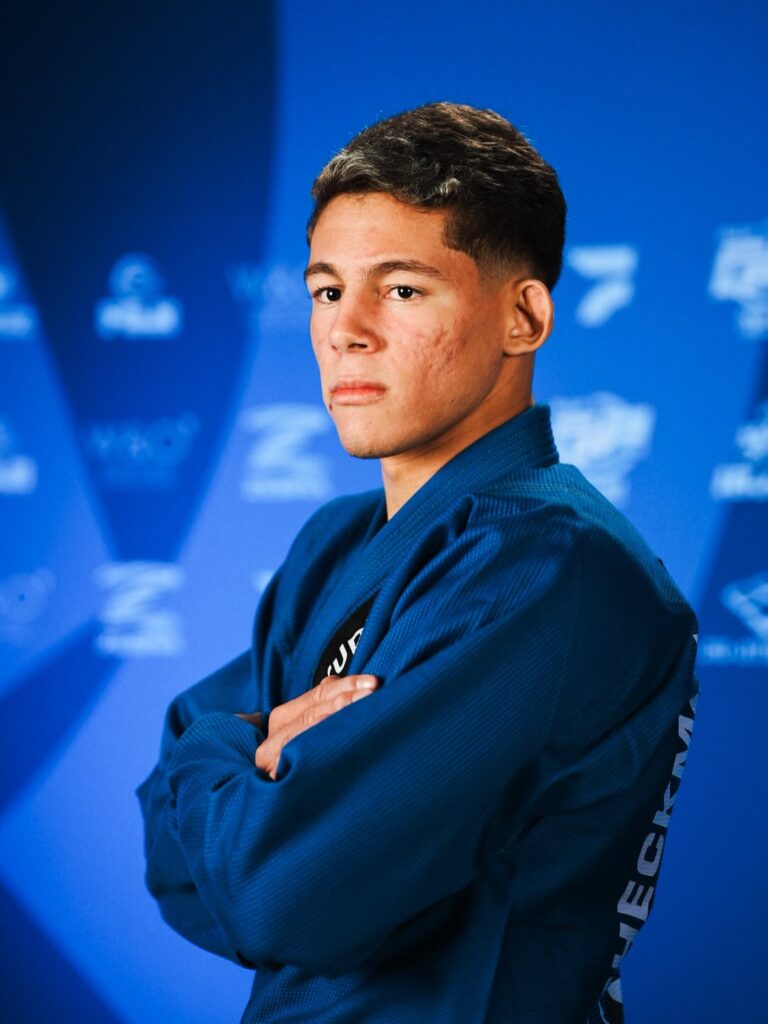
THE MAT NATION – Checkmat has a strong track record of developing big names, like Jansen Gomes, who also emerged as a prospect once. Do you see parallels between your path and his? And how does the team directly influence the development of athletes who reach the top?
KELLYSON CARLOS – I definitely think there are some parallels, mainly because we come from a team with a very strong history of developing high-level athletes. Jansen walked a path of a lot of hard work, dedication and results, and that serves as a reference for me. But I believe every athlete has their own path, and I’m building mine step by step. Checkmat has a direct influence on that because the level of training is very high. There is a culture of discipline and of constantly seeking evolution, and that ends up showing in competition. Being in that kind of environment makes a big difference for me, because I don’t just want to get to the top, I want to stay there.
This article was originally published in Portuguese: read the original version.