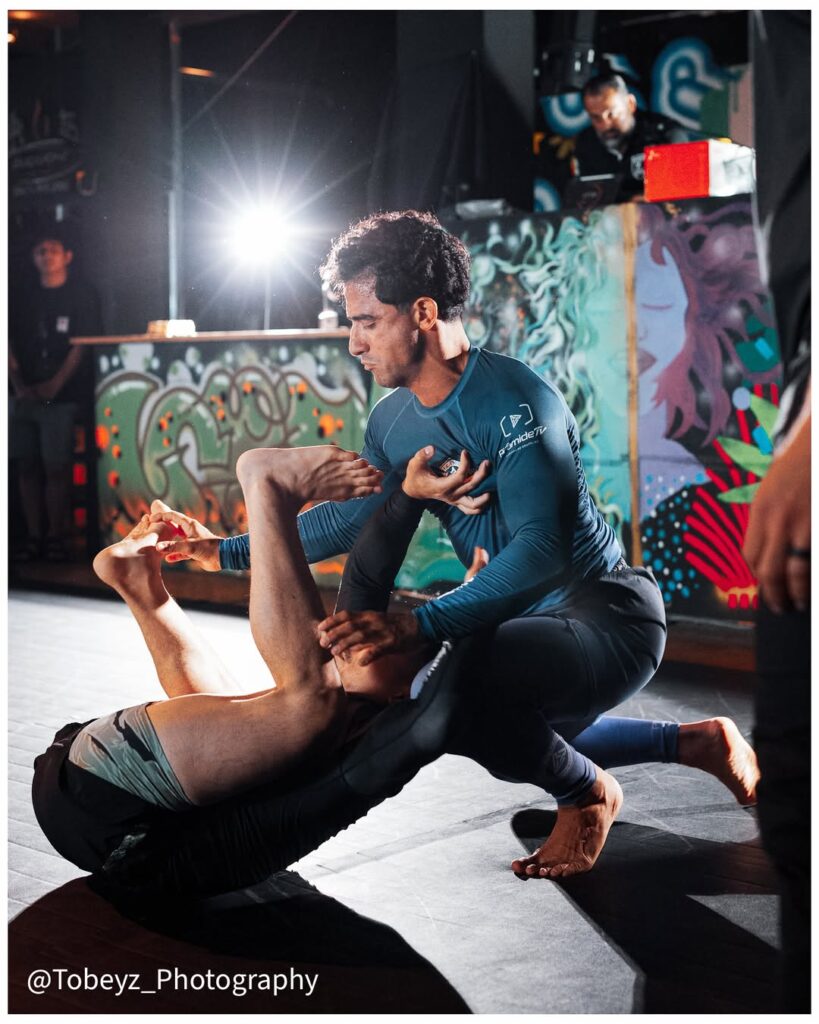
Becoming a reference in your field is no easy task. Those who manage it see an opportunity, turn the mission into an obligation and devote themselves entirely to developing a skill. That is exactly what Marco Aurellio de Queiroz, together with his brother Lucas Alexandre, did to make Pirâmide Grappling not just a different academy, but a distinctive one.
Today, Jiu-Jitsu without the gi, better known as No Gi, is a worldwide reality, but there was a time when the discipline was somewhat neglected in Brazil. Gi training filled academies’ entire schedules and, when people took off the gi to train, practice usually ran loose, with no routine and no method.
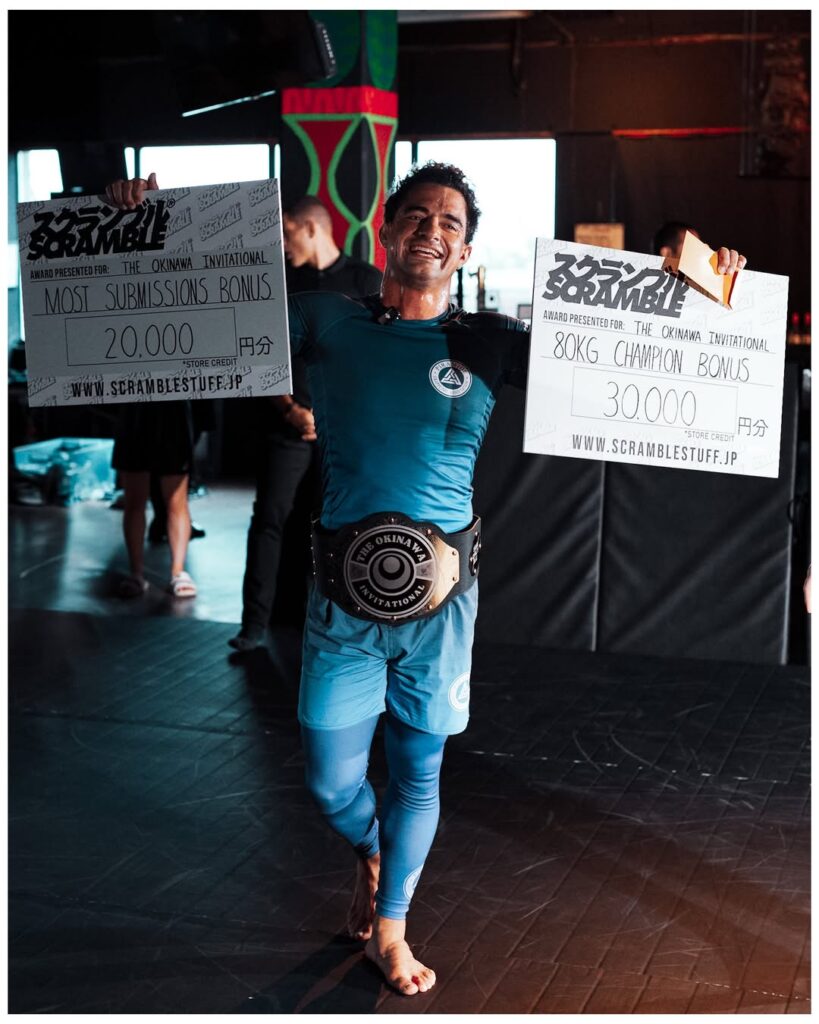
Speaking of method, it is a subject taken very seriously at Pirâmide, in Barra da Tijuca, in the West Zone of Rio de Janeiro. Marco Aurellio is committed to planned teaching, and every athlete who teaches under the team’s flag must do the same. Besides being a coach, the founder competes whenever an opportunity comes up. His most recent experience as a competitor was on the other side of the world, in Japan. At The Okinawa Invitational, Marco Aurellio took part in an under-80kg grappling GP. In total, 12 athletes were in the running, and the one who went furthest was him: a champion with honors, winning all five of his fights by submission.
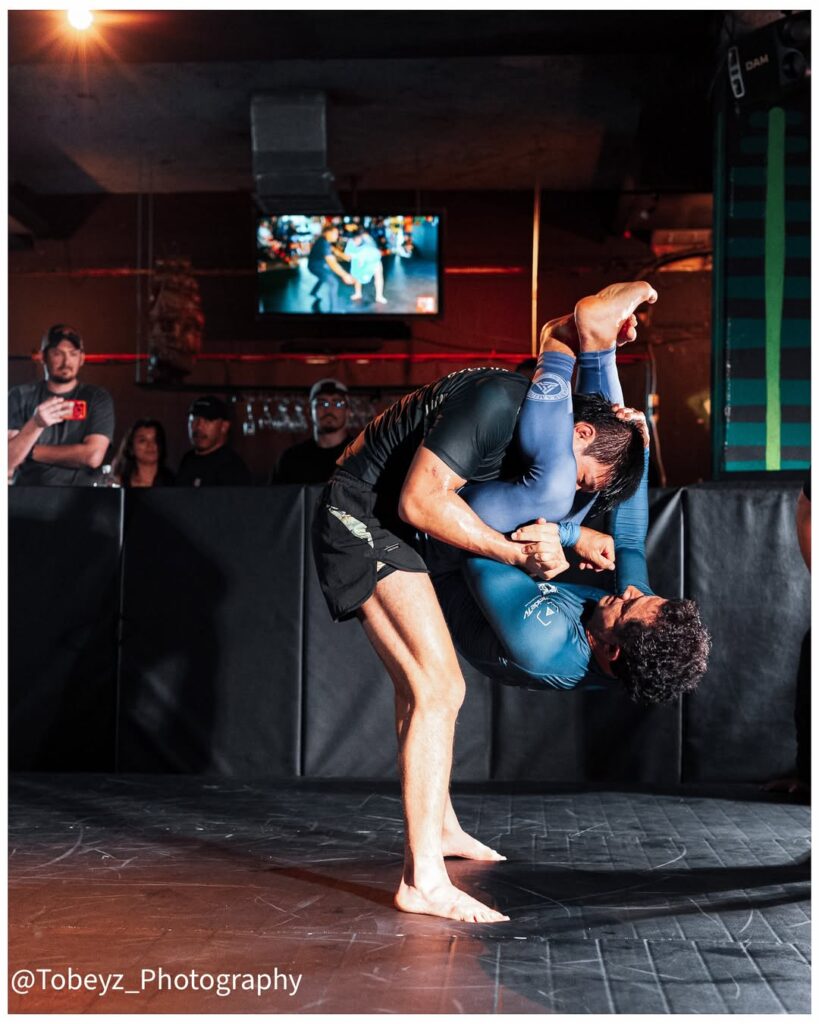
In an interview with The Mat Nation after his perfect experience in Asia, Marco Aurellio talked about the importance of showing, in practice, how effective the techniques drilled every day on the Pirâmide Grappling mats in Rio de Janeiro are.
THE MAT NATION – Winning a 12-man GP in Okinawa carries special symbolism. What was that experience like, and what does this win in Japan represent in your journey leading Pirâmide Grappling?
MARCO AURELLIO DE QUEIROZ – Winning a 12-man GP in Okinawa was very symbolic for me. Japan has always been a world reference when it comes to martial arts and discipline, so winning a title at this level here carries a different weight in my journey.
More than an individual win, I felt I was representing everything we build every day at Pirâmide Grappling. It has been years of developing a very specific training culture, method and mindset. Being able to cross the world and validate that at a high level, in such a traditional place for martial arts, was something very special.
I think this win shows that Pirâmide today is not just a local team. We are building our own identity, with international reach, able to compete and teach anywhere in the world.
THE MAT NATION – Pirâmide has built a very solid technical identity in No Gi. Being on the other side of the world, taking that knowledge to Japan and putting it into practice with total effectiveness in competition, did it give you any confirmation about the universality of the method you have developed?
MARCO AURELLIO DE QUEIROZ – Without a doubt. This experience in Japan reinforced my confidence in the method we developed at Pirâmide Grappling even more.
Modern grappling is very dynamic and globalized, but even so each team ends up creating its own characteristics. Ours has always been based on pressure, strategy, reading the fight and a lot of conscious repetition of the details. Seeing that work against athletes of different styles and nationalities shows that the principles we follow really are universal.
I truly believe that when a method is really solid, it works regardless of the country, the rules or the context. And maybe the most rewarding part was realizing that what we teach our students every day in Rio de Janeiro could be applied with total effectiveness on the other side of the world, in a highly competitive environment. That shows we are on the right path.
THE MAT NATION – Japan carries a martial heritage that influences the whole world. In your view, how does the country see grappling today, and what did this experience show you about the room the sport can still gain in a culture so connected to tradition and technical excellence?
MARCO AURELLIO DE QUEIROZ – Japan has a very deep relationship with martial arts. There is enormous respect for discipline, technique and the process of constant improvement. And that makes grappling be seen in a very serious way here.
At the same time, I realized grappling still has a lot of room to grow in this culture. The Japanese public understands and values technical details, strategy and competitive intensity, so there is a natural connection with the sport. I think No Gi, especially, is still going through a very big expansion in the country.
This experience showed me that modern grappling can connect very well with Japanese martial tradition. Even though it is a relatively new discipline compared to more traditional arts, it carries many values that Japan deeply respects: discipline, efficiency, adaptation and the constant pursuit of technical excellence. And living that up close really stayed with me.
This article was originally published in Portuguese: read the original version.